

Rabbit Rabbit #29: I Will Not Be Afraid of Women
Brandi Carlile, Earnestness, & Female Artists
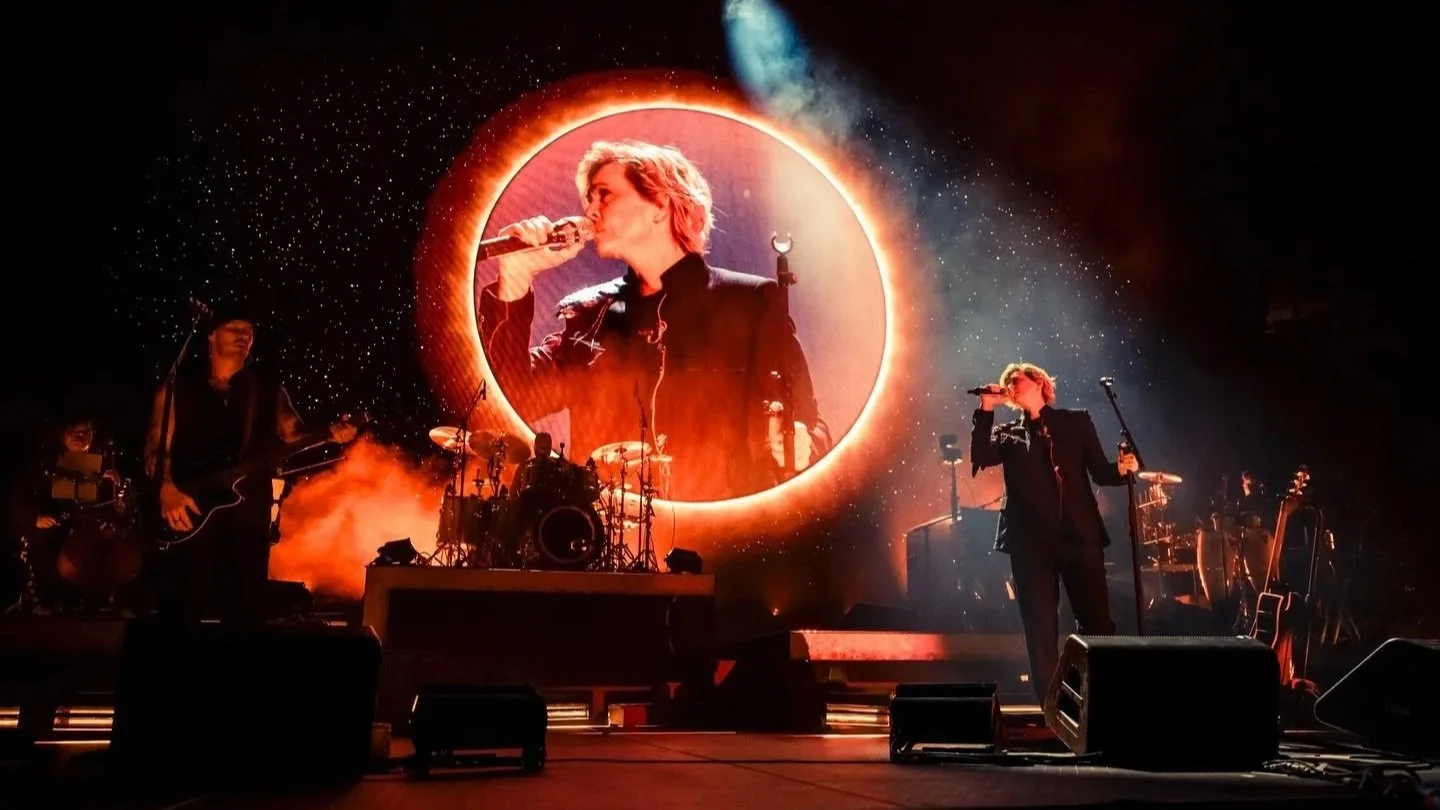
On a March evening in 2010, I watched a woman on American Idol sing a cover of the best song I’d ever heard. It was called “The Story,” host Ryan Seacrest announced, by a person named Brandi Carlile. I promptly downloaded the song on my iPod Nano and listened to it daily for the rest of fourth grade. Something about the combination of the hilly melody with the devotional lyrics melted my nine-year-old heart. When Brandi sang, “Oh, because even when I was flat broke / You made me feel like a million bucks, you do,” I understood everything there was to know about love. After enough listens, I asked for voice lessons. My parents signed me up, and thus began my life in the arts.
After 2010, I didn’t think about Brandi that much. She was always on my radar––her 2018 masterpiece “The Joke” stopped me in my tracks the summer after graduating high school––but over the years, a soft resistance to her ethos, firmly rooted in activism and overtly feminist messaging, percolated amongst people my age. I wrote her off without meaning to, forgetting to listen as new albums cropped up and different music captured my attention. After all, wasn’t she the one all the white, hetero, suburban moms liked, the same ones reading Untamed with their evening reading groups? Wasn’t she a little earnest?
Earnestness has been on my mind recently. I’ve spent time wondering what it means to be earnest in our current world. I’ve wondered trite things, like whether one can be earnest and also funny, or cool, or smart, or tuned-in. I’ve wondered bigger things, like what it means to be earnest as a Gen-Z person navigating the perilous strangeness of early adulthood while also bearing witness to the dismantling of the very democracy in which we came of age and trying, at all costs, to do something about it. What then, of earnestness? Marilynne Robinson points out in her 2016 lecture “A Theology for this Moment” that “no other species than ours could be called earnest. This is our response to special difficulties that attend our singular nature.” The problem of our humanity begets earnestness, it would seem. We just can’t help it.
In music, earnestness is often dismissed as “cringe,” which Lydia Polgreen defines in an opinion piece for the Times as “the ultimate insult of our era.” The word “implies a kind of pathetic attachment to hope, to sincerity, to possibility,” she writes, citing the musical Hamilton as a prime example. The idea she circles is that we outgrow things. This is undeniably true, and I’ll refine Polgreen’s thesis by positing that our collective attitude toward earnestness is pendulous, swinging between and reacting to the temperamental energies of politics and culture. Polgreen penned her article in celebration of Greta Gerwig’s choice to write the Indigo Girls’ 1987 hit “Closer to Fine” into her 2023 blockbuster Barbie, arguing for a resurgence of the kind of music that fosters “a sense that we are in this together…because the kernel of who we are is cringe. That is what it means to be open to the world.”
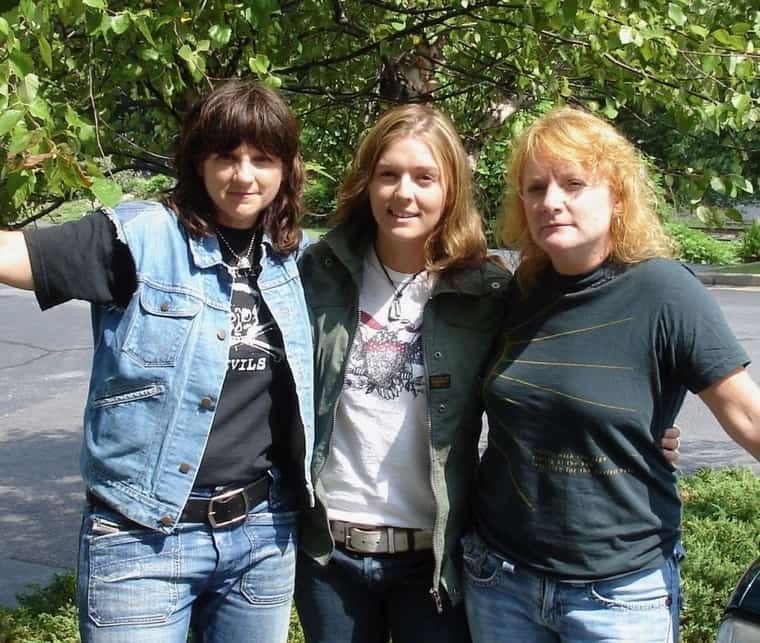
Amy Ray, Brandi Carlile, and Emily Saliers
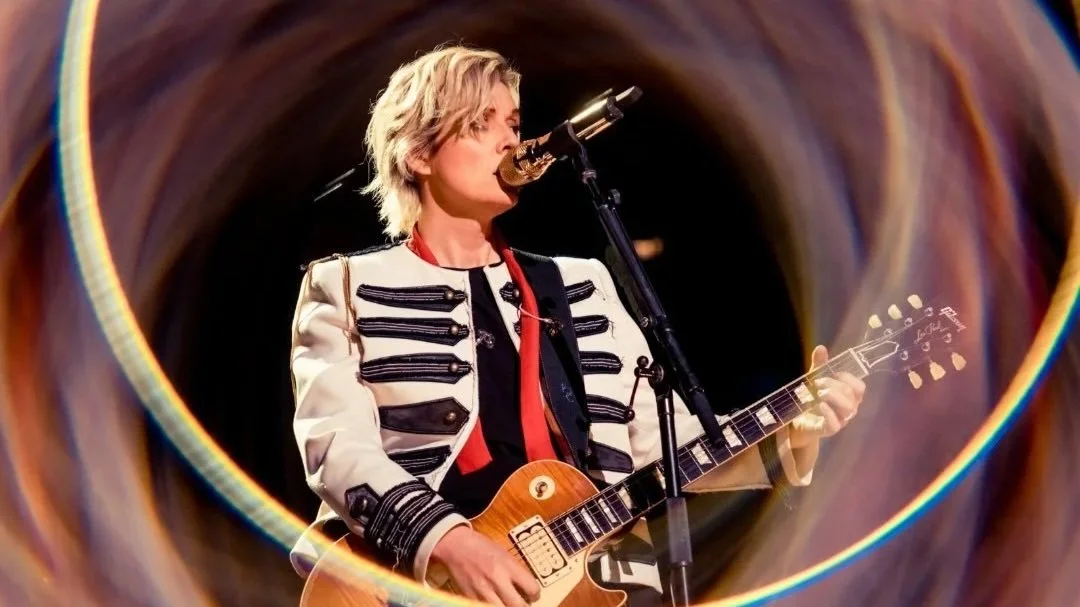
I came close to accessing that truthful kernel this past Saturday when I attended Brandi Carlile’s Human Tour, the second of two sold-out performances at Madison Square Garden. The tour supports her eighth studio album Returning To Myself, which was released in October 2025. I fell in love with the album’s titular single, “Returning to Myself,” when my aunt included it in a playlist for me. The song is about self-reflection and its b-side, isolation: “Returning to myself is such a lonely thing to do / But it's the only thing to do,” Carlile sings in her signature crackily robust warble. I love this concept because, at 25.5, I feel rather old. (I realize this is an objectively naïve and smug thing to say. To riff on a Frances Ha line, it’s offensive to actual old people. But obviously I am no longer a child; certainly iPod Nanos are all but extinct.) I’ve reached a point where I actually feel as though I have a self to return to. As I turned inward this past fall, struggling through an internship I did not particularly enjoy, I worked to articulate what I want to do, make, and see in this life. Brandi’s album accompanied me, as did her entire discography, which I delved into with a seriousness that bordered on the devotional. Every afternoon, I left the office and went for an eight-minute walk around a collection of homogeneous Flatiron district buildings––enough time to listen to “A War With Time” twice in full. Her music became meditative, a balm for my anxious soul, encouraging simple mantras like “Stay Gentle” and “Hold Out Your Hand,” lyrics I might have scoffed, or cowered, at in earlier years. And why––too basic? Too cringe? To hell with it, I say. I’m 25.5. I don’t have time for anything but inspiration.
Before Brandi’s set on Saturday, the trailer for the documentary film Come See Me in the Good Light, which features “The Story,” played on the side screens. Produced by Brandi, Tig Notaro, Glennon Doyle, and Sara Bareilles, among other artistic supernovas, the film follows the final year in the life of Colorado Poet Laureate Andrea Gibson, who passed away in July 2025 after a four-year battle with ovarian cancer. I first learned of Gibson and their poetry on Tig’s podcast Handsome, and was awestruck by their raw intensity. Their poetry sparkles with earnestness, the kind that reminds you of your being alive. Towards the end of the night, Brandi welcomed surprise guest Sara Bareilles onstage to sing their newly-released duet, “Salt Then Sour Then Sweet,” a song composed of lines from an unfinished poem by Gibson. The song goes:
Learn from the nightshades
They grow in the darkest places
Had we not been stung so many times
Would we ever have arrived
At this Heaven on Earth that I don't wanna waste?
It has been a gift to witness from afar this group of artists not only promote their film, which is nominated for Best Documentary at the 2026 Oscars, but also throw themselves into championing one another’s work, and creating new work as they grieve one of their own. It’s a public lesson in the importance of women and queer folks uplifting one another in the arts.
Sometimes, I meet women in my field who seem unsure how to hold space for other women, to treat them gently, kindly, and with curiosity. It’s deceptively easy to fear the power that a fellow woman might hold. I am not immune to these feelings. It’s scary to pursue one’s dreams in a world that conditions us to believe that there might not be enough room for everyone to achieve them. We compare and contrast our talents, our worth, and our experiences to no end. My friend Angie, who was my professor in college and is a fellow Brandi enthusiast, introduced me to the song “As Cool As I Am” by Dar Williams, which repeats a line in its chorus like an anthemic mantra: “I will not be afraid of women / I will not be afraid of women.” To watch Brandi and Sara join forces and perform a co-written song was a reminder of the beauty that emerges when we collaborate. Of course, I do–in fact, I must–value competition, but no, I will never be afraid of women.
The rest of the concert was equally brilliant; Brandi and the iconic Hanseroth twins, with whom she’s been playing around the world for twenty-five years, fielded audience requests for deep cuts, the Milwaukee-born duo SistaStrings provided effervescent instrumentals and haunting backup vocals, and the arena pumped their fists in joy. That’s always my favorite thing about a concert: stepping back and watching the crowd as if from far away, noticing how the hundreds of waving arms and nodding heads resemble one organism, moving to the beat of something undeniably good. Resistance turned flesh. Love in action.
Before her final encore, “A Long Goodbye,” Brandi addressed the audience one final time. “We really only have such a short time together,” she said. “It’s precious few moments we get.” My throat constricted. How very true! I knew this, and yet I might have been hearing it for the first time! I felt instantly compelled to conduct a conference call with every woman who’d ever taught me something to thank them and ask if I could come visit. (Thankfully, Angie and my aunts were on standby for live updates.)
“Did you hear the one about the girl / Who’d never seen a cactus tree?” the song begins. Now I was myself at nine, bopping around my room, wanting so badly to make music for real like all the singing women inside my iPod. Yes, Brandi, I did hear that one. I’ll play it again and again.
Recs: A hilariously touching piece by Sheila Heti for Granta (read it while the paywall’s down for another week!), Ally Pankiw’s 2025 documentary Lilith Fair: Building a Mystery (women in music explosion!) & the ephemeral new Searows album.
